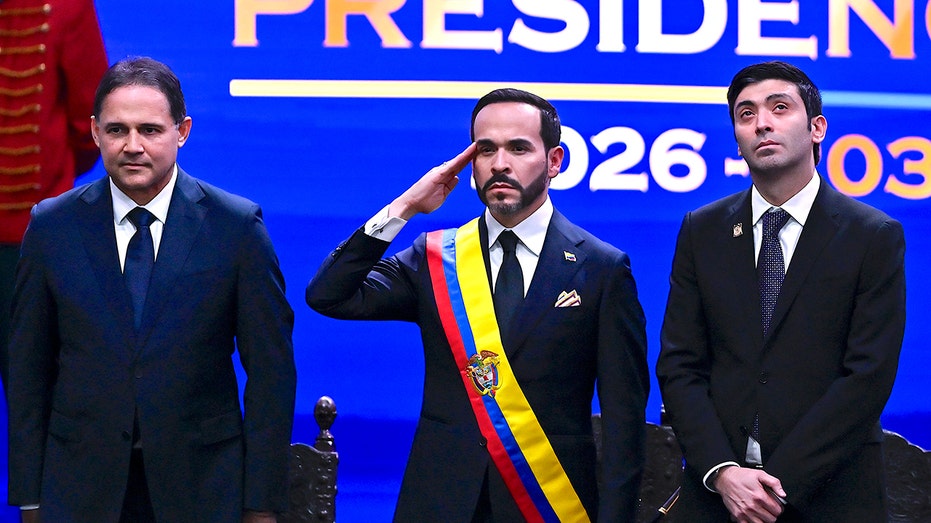
President Abelardo de la Espriella means business when it comes to his war against the cartels. Colombia’s new president, known by the nickname of ‘El Tigre’, was voted in on a law and order ticket and so far his actions in fighting the cartels are seemingly paying dividends — not just in Colombia but in Washington too.
Recently, he arrived at the Barranquilla police command around the early hours of the morning as 587 police officers and soldiers raided 50 locations across the Caribbean port city and its suburbs in Operation Blindaje 360. A few days earlier, domestic Colombian news outlets had widely publicized a recording intercepted by Colombian police of “Keko”, the alleged leader of a gang called “Los del Freseo” boasting that de la Espirella had nothing on him.
“The Tiger’s got nothing. Let him come out, and we’ll put lead in him,” Keko allegedly said on the recording.
Then, before dawn, Colombia’s president had tracked him down and was face to face with him, all caught on tape.
According to a video released by his presidential office, El Tigre told Keko the gang leader was “a tough guy on the phone… but the look of the fear on his face matched that of his many victims”. The sweep ended with 72 arrests.
ANTI-CARTEL HARDLINER CHANNELS TRUMP IN BID TO END COLOMBIA’S LEFTIST ERA IN PIVOTAL ELECTION
The theatrics played to a large audience who long argued that former leftist Gustavo Petros’s policy of pursuing engagement with drug traffickers and through conversation and peace talks had left Colombia more vulnerable to organized crime and further articulation between Colombian and Venezuelan cartels that had been dominating the space left by the power vacuum which emerged from effective law-enforcement control.
His government is also seeking to reverse former President Gustavo Petro’s “total peace” policy, which pursued negotiations with several armed organizations. Before taking office, de la Espriella announced that he would dismantle key elements of the policy and reactivate arrest warrants against members of illegal armed groups.
Nearly three months into his term, the 48-year-old lawyer has scrapped his leftist predecessor’s “total peace” talks, ordered every armed group treated as a terrorist organization and claims more than 32,000 arrests. He is doing it arm in arm with Washington.
A dual U.S.-Colombian citizen who lived in Miami before running for president, he has brought Colombia into President Donald Trump’s anti-cartel coalition. Last month, he personally handed a guerrilla boss accused of supplying Mexico’s Sinaloa Cartel to DEA agents with his hands and feet shackled.
The prisoner, Geovany Andrés Rojas, alias “Araña,” is alleged to have led the “Comandos de la Frontera” dissidents and now faces narco-terrorism charges in Southern California.
“The option of dialogue is completely exhausted,” de la Espriella told troops after his Aug. 7 inauguration. In an Oct. 12 address, he put the tally at 32,503 arrests, 33 ringleaders taken out of action and 679 drug-production sites destroyed or disabled. He has signed more than 100 extradition orders, including five for former armed-group peace negotiators wanted in the U.S. whose handovers the previous government had frozen.
‘DONROE’ DOCTRINE AND CONSERVATIVE VICTORIES SQUEEZE CARTELS IN LATIN AMERICA
The offensive reaches deep into the countryside, where conflict monitor ACLED counted August as the deadliest month for clashes between security forces and armed groups since it began tracking Colombia in 2018.
In late August he warned FARC dissident chief Iván Mordisco: “When you least expect it, a bomb is going to fall on you.” Two days later, he walked among the bagged bodies of 23 suspected dissidents at an army base in Guaviare, and troops killed the top commander of a paramilitary-rooted trafficking group in La Guajira.
Colombia became the 19th member of Trump’s Shield of the Americas coalition in August, and War Secretary Pete Hegseth said Bogotá had authorized “joint military operations to destroy terrorists and terror networks domestically.” The administration has pledged $1 billion in security aid, pending congressional approval, and Marine Gen. Francis Donovan, head of U.S. Southern Command, has toured Colombian bases.
However, speaking on-camera to Fox News Digital, Colombian Vice President José Manuel Restrepo said while his country is embracing President Donald Trump’s push for a new security alliance across the Western Hemisphere, he drew a clear line on the role American forces would play inside Colombia, saying Colombian troops — not U.S. forces — will carry out operations against the country’s armed groups.
According to Benjamin Gedan, a senior fellow and director of the Latin America Program at the Stimson Center in Washington who previously served as a South America Director in the White House, the last few years were an outlier:
“For decades, the United States and Colombia closely cooperated to fight guerrillas and organized crime. Plan Colombia was celebrated by both Republicans and Democrats. The Colombian military is well-trained and battle-tested. Renewed close cooperation between Bogotá and Washington is a cornerstone of the renewed U.S. focus on security in Latin America,” he said.
“Still, flashy military strikes on criminal targets will not answer the mail. These groups are well-armed, well-funded, and thrive in regions with little state presence. Images of criminals in body bags may give the impression of forward progress after the failed strategy of Colombia’s last leader, much as videos of exploding speedboats have become the calling card of the Shield of the Americas. In both cases, a more sophisticated strategy is needed to deal lasting blows to criminal groups,” Gedan argued.
CRIME, KIDNAPPINGS AND DRONE ATTACKS FLAGGED IN US WARNING FOR BORDER REGION
Oscar Palma, a professor of Security Studies at the University of Rosario in Bogotá, said it is still a little too early to assess the change in policies and affirm they will be fruitful within the Colombian context. “Beyond the policing acts themselves, there is the subjective feeling of security with debates within Colombian society on whether this open war strategy brings more or less security to the population. Many argue that the gangs are acting now more forcefully to defend their territories and business deals, while others believe that a strong police presence will eventually lead to less organized crime.”
Palma said there is a false dichotomy between having to choose all-out war or dialogue in order to achieve peace with groups such as the FARC and other gang leaders: “It is a fiction that you will come to zero combatants simply pursuing one strategy or the other—all-out war will never zero down those combating in the FARC and organized crime just as peace talks, especially if carried out in a misguided policy such as the one led by [Gustavo] Petros, will achieve real results.”
He said, “A better example is the strategy carried out by President [Juán Manuel] Santos during the dealings with the FARC, which led to a much safer Colombia: there were talks, but those were part of a bigger strategy of also fighting these groups with arms and bringing them to justice,” he added.
“There is a wave of freedom, a wave of democracy, a wave of free market… There is a new momentum for the region and we have to take advantage of that momentum. That’s what I said to President Trump,” Restrepo told Fox News Digital. “If we want to keep and preserve democracy in the region, the Shield of the Americas is going to be the best opportunity to do it.”